
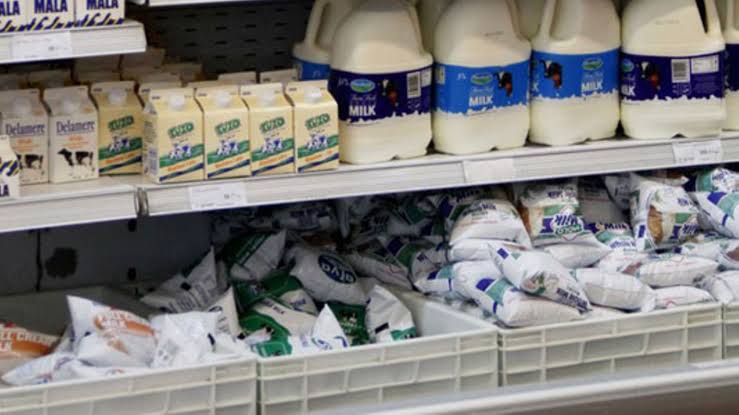
Kenyan households could face higher milk prices if weakening formal-sector supplies persist, with consumer groups calling for urgent action to protect both farmers and shoppers.
Data from the Kenya National Bureau of Statistics (KNBS) shows milk deliveries to processors and other formal-sector players fell to 84.44 million litres in June 2026, down from 88.89 million litres in May.
June's intake was also below the 90.24 million litres recorded in June 2025, highlighting a slowdown in the formal dairy supply chain.
The decline comes as food prices remain a major pressure point for Kenyan households. KNBS reported annual food and non-alcoholic beverage inflation of 8.6 per cent in June, well above the overall inflation rate of 6.4 per cent.

Consumers feel the pressure
The Consumers Federation of Kenya (COFEK) says the falling milk intake should not be dismissed as a temporary fluctuation.
COFEK Secretary-General Stephen Mutoro has called for the government to provide consumers with a clear assessment of the state of the dairy sector.
“Consumers are entitled to a clear, evidence-based account of the true state of the sector,” Mutoro said.
COFEK says some retailers in Nairobi are already reporting tighter supplies and higher prices, with fresh milk at one outlet in Waithaka reportedly rising from Sh70 to Sh80 a litre.
However, the reported retail increases should not be taken as evidence that milk prices are rising uniformly across the country. Retail prices vary by location, brand and type of milk.
The bigger problem may be on the farm
For dairy farmers, the challenge is not simply how much milk consumers are willing to buy. It is also the cost of producing each litre.
COFEK says some farmers are experiencing lower yields as pasture conditions come under pressure, while the cost of commercial feeds has also risen.
That creates a difficult balance for the sector.
If farmers receive prices that are too low, they may reduce production or leave dairy farming. But if production costs rise and the extra cost is passed along the supply chain, consumers ultimately pay more.
Kenya's dairy industry has expanded considerably in recent years. KNBS data shows milk production reached about 5.33 billion litres in 2024, while processors took in about 908.4 million litres, up from 810.7 million litres in 2023.
That longer-term growth makes the recent monthly decline worth watching, but it does not by itself establish that Kenya is facing a national milk shortage.
Why the June numbers matter
The formal market does not capture every litre produced in Kenya. A significant amount of milk is sold through informal channels or consumed directly on farms.
That means a fall in processor intake should be read as a warning sign for the formal supply chain rather than proof that total national milk production has fallen by the same proportion.
The monthly numbers can also fluctuate because of seasonal production patterns.
Still, the June figures add to concerns about whether processors and retailers will have enough supplies if farm production weakens further.
COFEK wants the government to publish a recovery plan, including regular information on milk intake, consumer prices and available reserves.
It has also called for measures to reduce the cost of dairy feed and for greater transparency around how surplus milk has been managed.
For consumers, the immediate concern is straightforward: will the price of milk rise further?
There is no certainty that it will. But with formal-sector deliveries falling and food prices already elevated, any prolonged weakness in milk production could put another familiar item on the household shopping list under pressure.
The challenge for policymakers is therefore two-sided — keeping dairy farming profitable enough for farmers to continue producing while ensuring that a basic household staple remains affordable.
Related Stories
- Exporters warn JKIA strike could put Kenya’s fresh produce markets at risk
- The cable that changed Kenya: How TEAMS helped open the country to the digital world
- Kenyan YouTubers prepare for 5% tax deduction as Google sets October deadline
Category: Business · Related Topic: Kenya Economy
Related Explainer: EXPLAINER: Why Kenya’s aviation workers are striking — and what travellers need to know
About the Author
Maureen Onyango is a journalist passionate about storytelling, life coaching and spiritual lessons. She studied at the Kenya Institute of Management and enjoys telling stories that inform, inspire and empower communities.
 Facebook
 Twitter / X
 WhatsApp
 LinkedIn
 Telegram
 Reddit