
NAIROBI, Kenya — Kenya is expanding its response to gender-based violence and femicide through specialised courts, survivor recovery centres, safe houses and new reporting channels, but a major gap remains: the country still lacks a consolidated official database showing the scale and patterns of femicide.
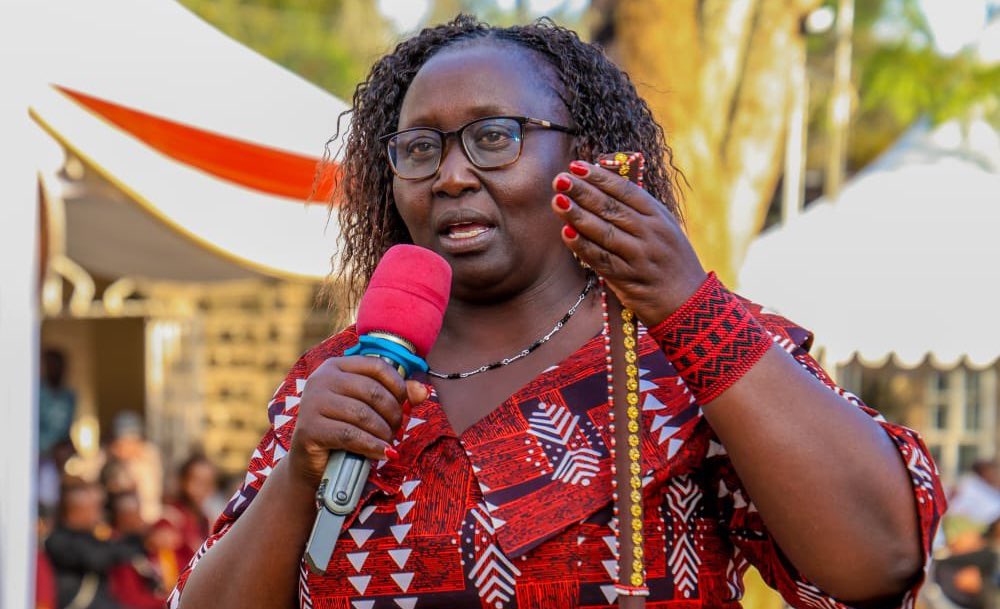
Gender, Culture and Children Services Cabinet Secretary Hanna Wendot Cheptumo says the government is shifting its focus beyond awareness campaigns towards prevention, survivor protection, access to justice and economic empowerment.
The multi-agency approach includes expanding GBV recovery centres and safe houses while strengthening cooperation between security agencies and the Judiciary to improve investigations and accelerate prosecutions.
Cheptumo said economic empowerment must also form part of the response, particularly because financial vulnerability can make it harder for survivors to escape abusive environments.

“Our ministry is advancing this agenda by supporting access to finance, markets, skills development, entrepreneurship opportunities and decent work,” Cheptumo said.
She said the government is also promoting financial literacy, digital inclusion and access to emerging economic opportunities, particularly for women and young people in rural and underserved communities.
Men and boys brought into GBV fight
The government is also placing greater emphasis on involving men and boys in changing attitudes that perpetuate violence against women.
“Gender equality is not a women’s issue alone. Men and boys are critical partners in transforming social norms and advancing equality,” Cheptumo said.
The approach comes amid efforts to treat GBV and femicide as a broader societal problem requiring action from government agencies, communities, families, civil society and religious institutions.
UN Women Kenya Country Representative Antonia N’gabala Sodonon said violence against women has consequences extending beyond individual survivors.
“Gender-based violence affects the fabric of society, and it erodes trust — trust within families, trust within communities, and even trust towards government,” Sodonon said.
One area where Kenya has recorded institutional progress is the Judiciary.
The number of specialised courts handling sexual and gender-based violence cases has increased from one to 13, an expansion aimed at accelerating cases, reducing backlogs and improving survivors’ access to justice.
The government has also introduced a WhatsApp reporting channel, 0704 884 444, to supplement the national 1195 GBV helpline, providing survivors and members of the public with another avenue to report abuse and seek assistance.
The missing piece: Kenya still struggles to count femicide
Despite the expansion of survivor support and justice mechanisms, Kenya continues to face a fundamental data challenge.
There is no single comprehensive government-run public database providing a national count and detailed tracking of femicide cases.
One of the most extensive publicly accessible records is the Silencing Women database, developed by Africa Data Hub in partnership with Odipo Dev and Africa Uncensored.
Drawing on court records and media reports, the project has documented 1,069 killings of women between 2016 and 2025, of which 842 meet the UNODC definition of femicide.
The data exposes patterns that are difficult to see when cases are treated individually.
Among cases where the perpetrator was known, 87 per cent of victims were killed by someone they knew, including intimate partners, relatives or friends. The project further found that 80 per cent of known perpetrators were currently or had previously been in an intimate relationship with the victim.
The database also highlights the length of time many families wait for justice, with some murder cases taking years to move through the courts.
Can Kenya measure whether its interventions are working?
The government's latest interventions address several documented weaknesses in Kenya's response to GBV and femicide: difficulties reporting abuse, inadequate survivor support, lengthy court processes and survivors' economic vulnerability.
Specialised courts could help cases move faster, while additional recovery centres, safe houses and reporting channels could make it easier for survivors to seek protection before violence escalates.
But the absence of a comprehensive official femicide tracking system creates an accountability problem.
Without consistent national data showing who is being killed, where killings are occurring, relationships between victims and perpetrators, previous reports of abuse and the progress of cases through the justice system, measuring the effectiveness of government interventions remains difficult.
The challenge for Kenya is therefore moving beyond expanding its response infrastructure to demonstrating, through reliable data, whether those interventions are ultimately reducing violence and preventing women from being killed.
You may also like
Category: News
Related Video: Murkomen Says Kenya Is Safe: “Stop Creating a Crisis” | Political Goons & Security Under Scrutiny
Related Explainer: EXPLAINER: Why Kenya’s aviation workers are striking — and what travellers need to know
About the Author
Brian Njagi is a final-year Mass Communication student passionate about storytelling, communications, and visual design. He has gained hands-on experience in article writing and campaign design at AMWIK. At LiveNow Africa, he explores how media, technology and data can drive clear, engaging and well-researched storytelling.
 Facebook
 Twitter / X
 WhatsApp
 LinkedIn
 Telegram
 Reddit