Some cancer medicines costing up to KSh1 million per treatment cycle could fall below KSh50,000 under a new Kenya-Pfizer agreement.
President William Ruto has announced a new agreement with Pfizer that could dramatically lower the cost of selected cancer medicines in Kenya, with some treatment cycles expected to fall from as much as KSh1 million to below KSh50,000.
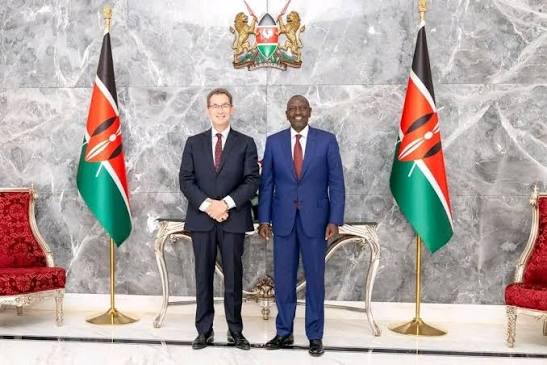
The deal was announced on Monday after Ruto met Pfizer Chairman and Chief Executive Albert Bourla at State House, Nairobi. It was signed between Pfizer and the Kenya Medical Supplies Authority (KEMSA) under the company’s Accord for a Healthier World programme.
Ruto said the agreement covers medicines used in treating breast, stomach, colon, lung, prostate and oesophageal cancers, as well as leukaemia, lymphoma and multiple myeloma.

“Today, Kenya has made a major breakthrough in the treatment of several cancers,” Ruto said.
The President said the lower prices could make the KSh800,000 Social Health Authority (SHA) cancer benefit sufficient to cover treatment in cases where patients previously had to meet additional costs.
However, the practical impact will depend on how quickly the new prices are reflected in procurement, distribution and treatment at health facilities.
A major test for cancer care
Cancer remains a major health burden in Kenya. The latest WHO/IARC data estimates about 44,700 new cancer cases and more than 27,000 cancer deaths occur in the country each year. Breast, cervical, prostate, oesophageal and colorectal cancers are among the most common.
For many families, the cost of medicines is only one part of the financial burden. Diagnosis, surgery, radiotherapy, chemotherapy, transport and repeated hospital visits can all add to the bill.
The new agreement therefore addresses an important part of the problem, but it does not by itself resolve wider gaps in cancer screening, diagnosis and access to treatment.
WHO has warned that the global cancer burden is rising and that countries need to expand access to prevention, early detection and treatment alongside stronger financial protection for patients.
What the Pfizer deal means
Pfizer says its Accord for a Healthier World programme is designed to provide eligible lower-income countries with its patented medicines and vaccines on a not-for-profit basis. The programme includes treatments for certain cancers and other serious diseases.
Ruto said Kenya would also benefit from access to newer cancer therapies and that the partnership could support efforts to make pharmaceutical production technologies available on the continent.
The announcement comes as Kenya seeks to expand access to cancer care through SHA and reduce the amount patients pay from their own pockets.
For patients and families, however, the real measure of the agreement will be simple: whether the cheaper medicines are available when they are needed, at facilities they can reach, and without unexpected additional costs.
The government and KEMSA will now face pressure to turn the headline price reductions into actual savings for patients.
Related Stories
- Kenyans Skip Health Checks Despite Knowing the Risks
- Ruto Joins African Leaders for Hichilema’s Second Inauguration
- EXPLAINER: Why Kenya’s aviation workers are striking — and what travellers need to know
Category: Health · Related Topic: Social Health Authority (SHA)
Related Video: Murkomen Says Kenya Is Safe: “Stop Creating a Crisis” | Political Goons & Security Under Scrutiny
Related Explainer: EXPLAINER: Why Kenya’s aviation workers are striking — and what travellers need to know
About the Author
Maureen Onyango is a journalist passionate about storytelling, life coaching and spiritual lessons. She studied at the Kenya Institute of Management and enjoys telling stories that inform, inspire and empower communities.
 Facebook
 Twitter / X
 WhatsApp
 LinkedIn
 Telegram
 Reddit