
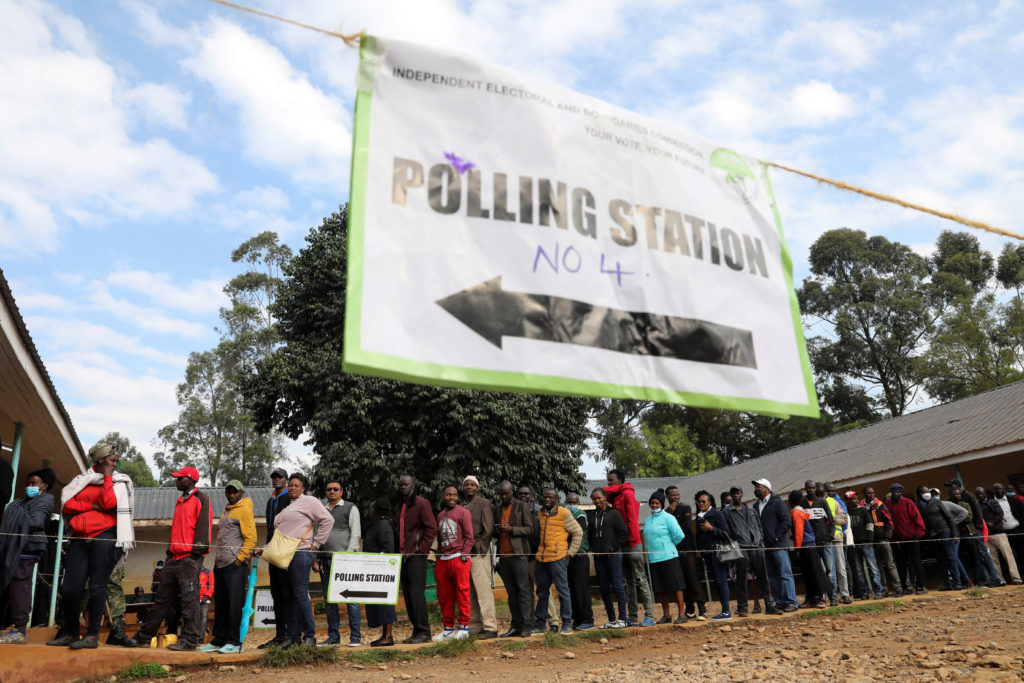
Kenya’s 2027 General Election is entering a critical phase, with the Independent Electoral and Boundaries Commission facing pressure over funding, election technology and an ambitious expansion of the voter register less than a year before polling day.
The immediate concern is money.
IEBC says it requires Sh74.4 billion for election preparations and the poll, but Treasury projections indicate only about Sh41 billion will be available during the critical electioneering period, creating a funding gap of nearly Sh34 billion at the point when major preparations must be completed.
The problem is not simply whether the government eventually allocates more money. Elections require significant spending months before voters arrive at polling stations.

IEBC must acquire and test technology, procure ballot papers and statutory forms, register voters, conduct voter education, recruit and train temporary officials and organise logistics across the country.
The technology bill alone is substantial.
IEBC plans to replace 45,353 ageing election kits bought in 2017 while reusing 14,000 acquired in 2022. The commission requires 59,352 kits for polling and training, with MPs approving about Sh9.3 billion for the technology.
But money is now only part of the problem.
On September 4, the Public Procurement Administrative Review Board ordered IEBC to amend sections of its tender for the Integrated Elections Management System after finding parts of the tender insufficiently clear, certain or objective.
The procurement was not cancelled, but IEBC must correct the affected provisions, republish the tender document and give bidders at least seven days to respond.
That creates another pressure point: time.
The commission is simultaneously trying to dramatically expand Kenya’s electorate. It is targeting approximately 28.5 million registered voters for 2027, compared with 22.1 million in the 2022 General Election.
IEBC has also announced plans to expand diaspora voter registration and use biometric technology to strengthen verification of the voters’ register.
The months ahead will therefore provide several important tests.
The first is whether Treasury and Parliament close the funding gap early enough to avoid delayed procurement and rushed implementation.
The second is whether the election technology tender survives procurement scrutiny and leaves sufficient time for deployment, testing and simulation.
The third is voter registration. Failure to substantially increase registration among millions of eligible Kenyans — particularly young voters — could become another major election issue.
Kenya has been here before: disputes over technology, procurement and election preparedness have repeatedly become politically explosive.
The difference in 2027 is that the warning signs are appearing early.
That gives IEBC, Treasury and Parliament time to act — but it also means they will find it increasingly difficult to argue later that problems were unforeseen.
The real countdown to August 10, 2027 is therefore no longer measured only in days.
It is being measured in shillings, procurement deadlines, voter registrations and election kits.
You may also like
Category: Business · Related Topic: 2027 Elections
Related Video: Dolly Parton’s Family Announces Her Passing in Emotional Tribute
 Facebook
 Twitter / X
 WhatsApp
 LinkedIn
 Telegram
 Reddit