
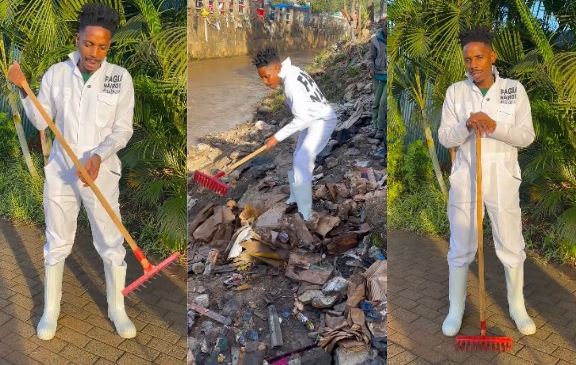
After days of heavy rain and deadly flooding in Kenya’s capital, the comedian and activist Eric Omondi is urging residents to pick up brooms and shovels — and take matters into their own hands.
Mr Omondi on Tuesday announced a citywide clean-up campaign aimed at clearing blocked drainage systems, which he says are a major cause of the recurring floods that have killed dozens of people in Nairobi.
The initiative, dubbed #FagiaNairobi, comes days after torrential rains swept through parts of the city, leaving destruction in their wake and claiming more than 40 lives.
“Nairobi is our home; we will not wait anymore,” Mr Omondi said in a message shared with supporters. “We will act to prevent further death and destruction.”
A call to clean the city
The comedian said he spent hours visiting flood-prone neighbourhoods to understand why the city continues to suffer severe flooding whenever heavy rains arrive.
His conclusion, he said, was clear: blocked drainage and uncollected rubbish.
“The cause is very simple: drainage and garbage,” he said. “Every year we ask why people are dying when it rains.”
Mr Omondi said rubbish clogging storm-water channels prevents rainwater from flowing freely, causing streets and residential areas to flood.
Gathering volunteers
The clean-up effort is scheduled to begin on Saturday morning at Uhuru Park, where volunteers are expected to gather before spreading across parts of the city to clear drainage channels and remove waste.
Participants have been asked to bring basic tools such as brooms, rakes, gloves and face masks.
“Let’s all meet at Uhuru Park this Saturday at 8am,” Mr Omondi said. “Carry a broom, a rake, a glove and a mask.”
Organisers say the exercise will focus on major roads and known flood hotspots where blocked drains often lead to dangerous build-ups of water.
Questions about city preparedness
Flooding has become a familiar crisis in Nairobi during the rainy season. Urban planners and environmental groups have long warned that poor waste management, rapid urban growth and ageing drainage infrastructure leave the city vulnerable.
Mr Omondi also pointed to what he described as a failure by leaders to address the problem.
“As usual, the problem is negligence and corruption from leaders,” he said. “But that will soon be a thing of the past.”
City authorities have in the past launched their own clean-up campaigns and drainage upgrades, though residents often complain that garbage collection and drainage maintenance remain inconsistent in many neighbourhoods.
For now, Mr Omondi says residents should not wait for government action.
His message is simple: if the drains are blocked, clear them.
“There will be a new Kenya,” he said, “but we must start by fixing our city.”
